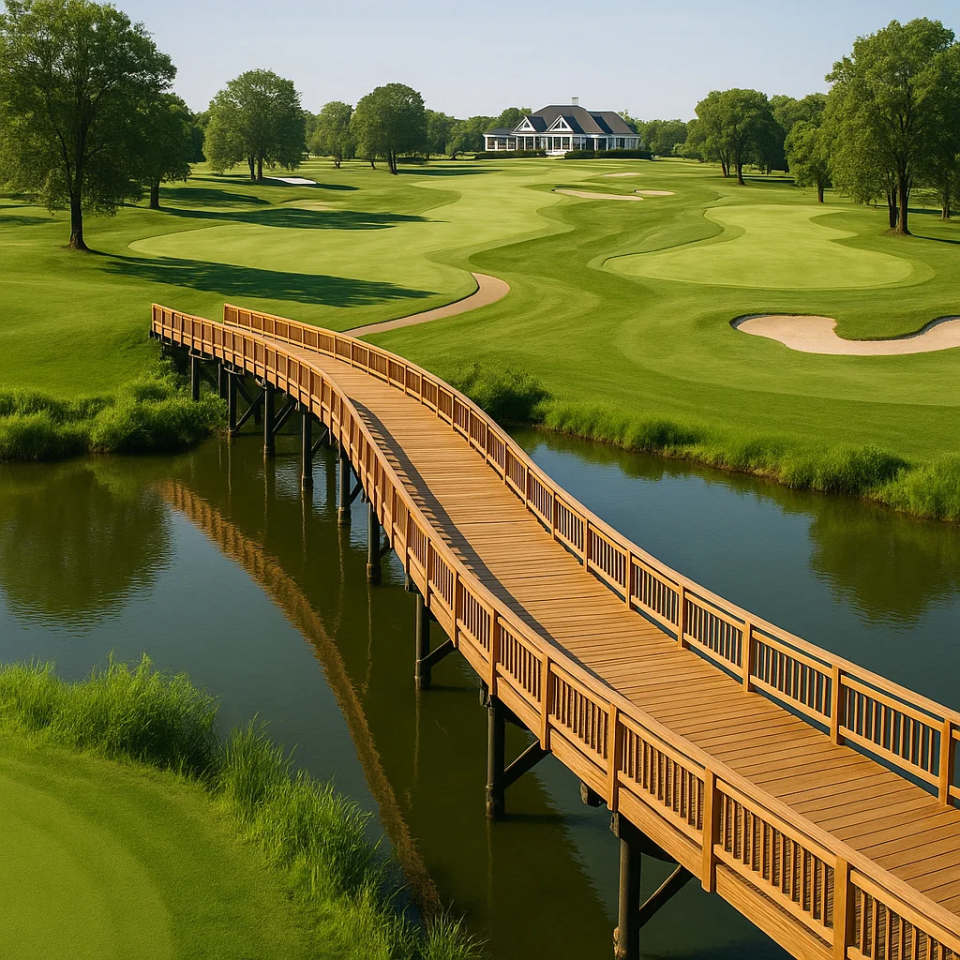
Golf Course Water Hazard Bridge

Golf courses rely on smart design to handle water features safely and keep play moving. Bridges that cross water hazards must support golf carts, walkers, and maintenance equipment without disrupting the natural view or slowing the flow of play. Greenway Bridge Co. builds timber golf course bridges designed to blend with the landscape, withstand regular use, and serve golfers for decades.

Highlights:

  • Engineered for golf cart and foot traffic
  • Natural aesthetic that enhances course design
  • Minimal environmental impact during construction
Why Choose Us for Golf Course Water Hazard Bridges?

Greenway Bridge Co. has over 50 years of family heritage in timber bridge construction. We’ve worked with golf course superintendents, course architects, including those who have designed Bobby Weed courses, and club directors across the United States. Our bridges serve prestigious clubs like Marsh Landing Country Club and courses at world-class golf resorts. We understand the balance between creating functional crossings and preserving the natural beauty that defines great golf holes.

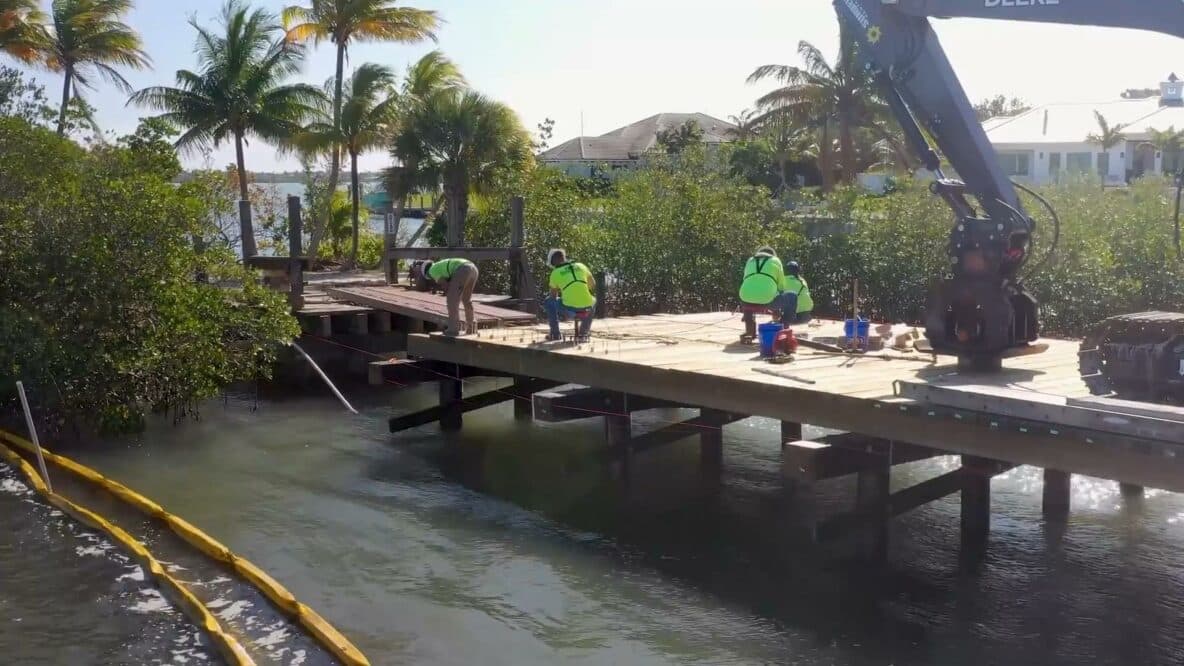
What makes our approach different is our focus on minimal environmental impact and long-term durability. We use pile-driven foundations and top-down construction methods that protect sensitive wetlands and waterways. Our in-house design and construction teams handle every detail from initial consultation through final inspection. We own our equipment, which means faster project timelines and better cost control. Each bridge is engineered to the highest tolerances, ensuring safe passage for carts, players, and grounds crews year after year.

Our Golf Course Bridge Services

Golf Cart Bridges

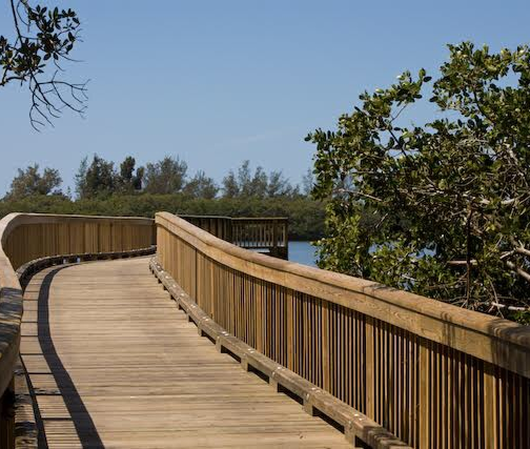
Golf cart bridges connect tees, greens, and fairways across water features and wetlands. These structures handle continuous cart traffic while fitting naturally into the course layout. We design each bridge to match the property’s style, whether you need a simple crossing or a signature feature that enhances a memorable hole. Our bridges support standard golf cart traffic without sagging, bouncing, or showing premature wear.

These bridges serve a practical purpose and contribute to the overall experience on the course. Golfers expect smooth transitions between holes. Maintenance crews need reliable access to every part of the property. Our golf course bridges deliver both without requiring frequent repairs or disrupting play during construction.

Key Points:

  • Designed for daily golf cart use
  • Natural wood aesthetic blends with landscapes
  • Built to withstand weather and heavy traffic
Free Consultation

Maintenance Vehicle Bridges

Course superintendents need access to every area of the property, including areas with mowers, aerators, and utility vehicles. Maintenance vehicle bridges are built heavier than standard cart bridges to safely handle ground equipment. We engineer these structures to support the weight and width of maintenance machinery without compromising stability or longevity.

Our maintenance bridges provide reliable crossings that withstand daily use by heavy equipment. We work with superintendents to determine load requirements and design bridges that meet those needs. Whether crossing a small stream or a wide water hazard, these bridges keep your crew moving efficiently across the entire course.

Key Points:

  • Engineered for heavy grounds equipment
  • Wide deck options for larger machinery
  • Durable construction for long service life
Free Consultation

Tee Access Bridges

Some of the most memorable holes feature elevated or island tees that require bridge access. Tee access bridges create dramatic moments while ensuring golfers reach the tee box safely. We design these crossings to enhance the golf experience, whether you’re creating a signature hole or solving an access challenge on your course layout.

These bridges often become defining features of a golf hole. We build structures that complement the surrounding terrain and add visual interest without overwhelming the natural setting. Our timber construction fits the aesthetic expectations of high-end golf courses while providing the structural integrity needed for daily use.

Key Points:

  • Custom designs for elevated tee boxes
  • Enhance signature holes and course routing
  • Safe, stable access for all players
Free Consultation

Course Feature Bridges

Feature bridges add beauty and function to water hazards, streams, and wetland areas. These structures create visual interest on key holes while serving as practical crossings. We work with course designers to build bridges that enhance the course’s character. Some courses want understated crossings that blend quietly into the landscape. Others wish to make statement pieces that golfers remember long after their round.

Our approach balances aesthetics with durability. We use rot-resistant timber and galvanized fasteners that are moisture-resistant. Each bridge is custom-built to fit the specific site conditions and the hole’s design vision.

Key Points:

  • Custom designs match course aesthetics
  • Built for both beauty and function
  • Weather-resistant materials ensure longevity
Free Consultation

What To Expect – Our Process

Step 1

Initial Consultation

You reach out by phone or through our contact form. We’ll discuss your project goals, timeline, and budget. You’ll speak with someone who understands golf course construction and can answer your questions right away.

Step 2

Site Inspection and Evaluation

We visit the course to evaluate terrain, soil conditions, water movement, and access points. You’ll walk the site with our team. We’ll measure the crossing, assess foundation requirements, and identify any environmental considerations that affect the design.

Step 3

Design & Proposal

You’ll receive a detailed proposal with custom design drawings, material specifications, and project timeline. We explain load capacity, construction methods, and warranty terms. You decide whether to move forward with no pressure.

Step 4

Construction

Our crews arrive with company-owned equipment and begin construction using methods that minimize disruption to course operations. We coordinate with your maintenance schedule to reduce impact on play. You’ll see the bridge take shape using pile-driven foundations and proven building techniques.

Step 5

Final Inspection & Warranty

We perform a thorough walkthrough with you to ensure satisfaction. You’ll receive warranty documentation and maintenance guidance. Our team remains available for ongoing support and future service needs.

Common Golf Course Water Hazard Bridge Challenges in the United States

Golf courses face unique challenges when building bridges over water features. Local conditions create specific problems that require thoughtful solutions.

Challenge What It Looks Like How We Help
Heavy Cart Traffic Wear Daily golf cart crossings can cause sagging, cracking, or loose boards on standard bridges that are not engineered for continuous use. We engineer bridges to handle heavy cart traffic using pressure-treated timber and reinforced deck systems designed for golf course conditions.
Wetland Environmental Restrictions Water hazard areas often sit in protected wetlands where traditional construction methods disturb sensitive ecosystems and violate regulations Our pile-driven foundations and top-down construction methods minimize ground disturbance while meeting environmental permit requirements for wetland crossings.
Visual Impact on Course Design Poorly designed bridges stand out awkwardly and detract from the natural beauty that defines great golf holes and resort courses. We create custom timber bridges that blend naturally with course landscapes, enhancing the visual experience golfers expect rather than disrupting it.
Penalty Area Access Issues Players need clear understanding of relief options when a ball enters a penalty area near or under a bridge structure. Our bridges are designed as immovable obstructions, allowing golfers free relief under local rules while maintaining safe passage across water features.
Seasonal Weather Damage Freeze-thaw cycles, heavy rain, and temperature swings cause wood rot, fastener corrosion, and structural failure in bridges built with inadequate materials. We use rot-resistant timber and galvanized hardware specifically chosen to withstand weather exposure and provide decades of reliable service.
Maintenance Equipment Access Courses require bridges strong enough to support mowers, aerators, and utility vehicles, not just golf carts and foot traffic. Our maintenance vehicle bridges are engineered for heavier loads, ensuring grounds crews can access every area of the course safely.

Local Services Throughout the United States

We serve golf courses nationwide with timber bridge construction that fits naturally into course landscapes. Our team responds quickly and brings decades of experience working with course superintendents and club directors across the country.

Frequently Asked Questions

Bridge costs depend on span length, load requirements, site access, and environmental conditions. A standard golf cart bridge over a narrow water hazard typically ranges from $15,000 to $40,000. Longer spans, higher load ratings for maintenance vehicles, or complex wetland sites increase costs. We provide free consultations and detailed proposals with no obligation.

We’ve built bridges for over 50 years, including prestigious Bobby Weed-designed golf courses and the National Park Service. Our family heritage in bridge construction gives us deep expertise in timber structures. We own our equipment, which reduces costs and speeds up timelines. Our pile-driven foundations and top-down construction methods better protect wetlands than traditional contractors’ methods. We handle design, engineering, construction, and maintenance all in-house.

Timber bridges cost less, install faster, and blend naturally with golf course landscapes. Concrete bridges can handle very heavy loads and last longer in high-traffic areas, but they look industrial and cost significantly more. For most golf courses, timber provides the right balance of durability, aesthetics, and value. We help you choose based on your cart traffic patterns, maintenance vehicle needs, and your course design vision.

A standard golf cart bridge takes two to four weeks from start to finish. Longer spans, complex sites, or environmental permitting requirements extend the timeline. Weather conditions and seasonal ground conditions also play a role. We coordinate construction around your tournament schedule and peak play times to minimize disruption.

If your current bridge shows signs of sagging, cracking, or loose boards, it’s time to evaluate. Bridges that bounce under cart traffic or have rotting support posts pose safety risks. Courses expanding into new areas or redesigning holes may need bridges to improve routing and access. We offer free site inspections to assess structural condition and recommend repair or replacement.

We provide warranty packages with every bridge project covering materials and workmanship. Warranties vary based on project scope and materials used. We also offer maintenance programs for golf courses with multiple bridges, as well as for clubs that require regular inspections and preventive care. Our team reviews warranty terms and maintenance options during the proposal process.

Yes, bridges are treated as immovable obstructions under golf rules. If a ball lies under a bridge or the bridge interferes with a player’s stance or swing, the golfer is entitled to free relief. The player drops within one club length of the nearest point of relief, no closer to the hole. Local rules may define specific procedures for bridges crossing penalty areas.

We build covered timber bridges that add historic charm and weather protection to golf courses. Covered bridges are effective signature features for resort courses or clubs seeking distinctive design elements. The roof structure protects the deck and structural components from weather exposure, extending service life and reducing maintenance. These bridges handle both golf cart and pedestrian traffic.

When a ball enters a penalty area (water hazard) marked by yellow stakes or a hazard line, the player has options under the rules. You can play the ball as it lies if it’s playable, take stroke-and-distance relief by replaying from where you hit the previous shot, or drop within two club lengths of where the ball crossed the hazard line. The bridge itself doesn’t change these options unless local rules specify otherwise.

Our bridges are engineered specifically for continuous golf cart use. We use pressure-treated timber rated for ground contact and moisture exposure. Deck boards are spaced and fastened to prevent sagging or loosening under repeated cart crossings. Structural beams are sized to handle concentrated loads from cart wheels. Courses like Blackwolf Run and Marsh Landing Country Club have proven our bridges withstand years of daily traffic without significant wear.