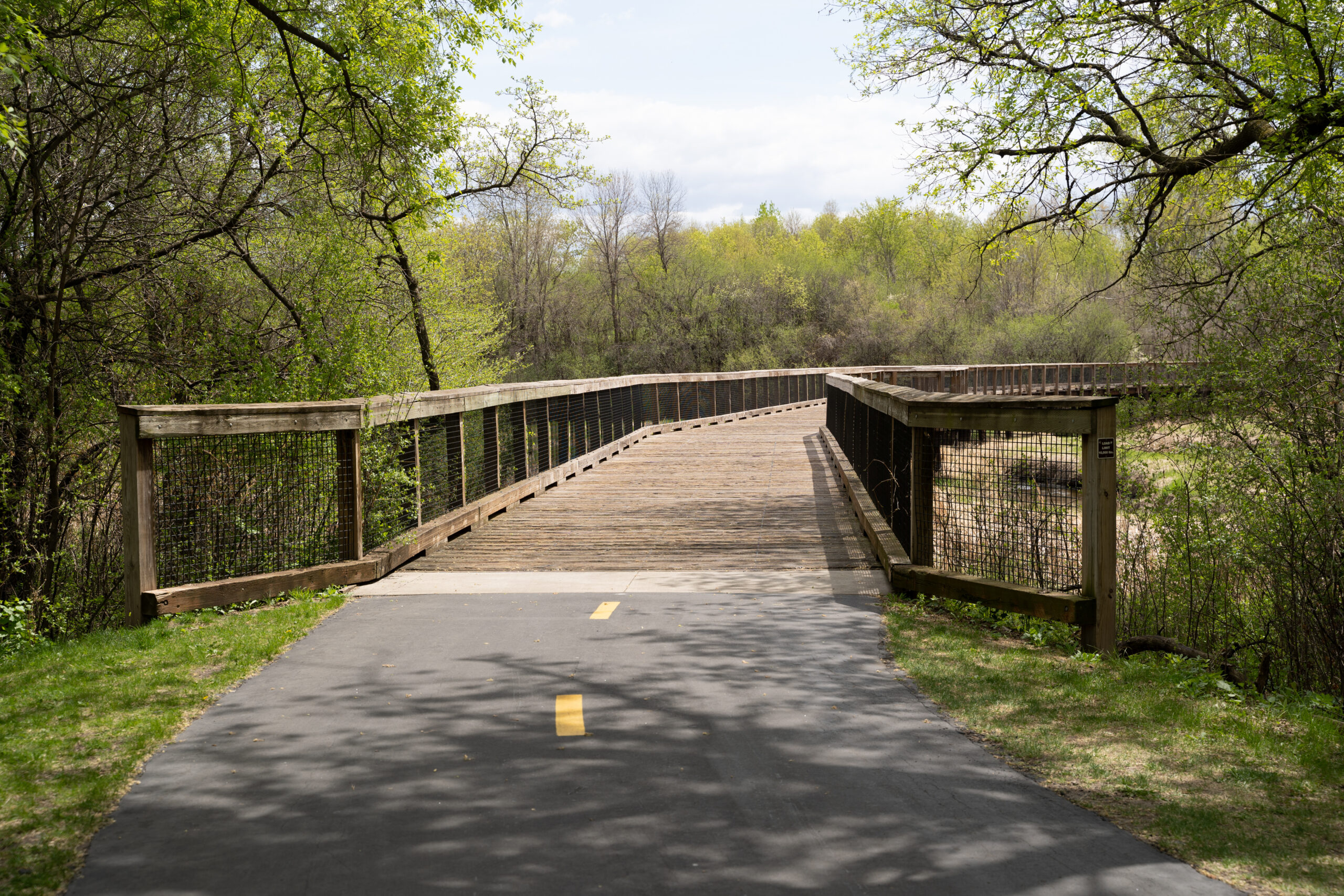
Military Timber Bridge Construction

Military installations and training facilities need permanent timber bridge solutions built for decades of reliable service. Remote sites, soft soils, and restricted access require specialized construction methods. Greenway Bridge Co. builds heavy-duty timber bridges designed to handle military vehicles while minimizing environmental impact.

Highlights:

  • 50+ years of bridge-building experience

  • Pile-driven foundations for challenging terrain

  • Nationwide service with company-owned equipment

Why Choose Us for Military Timber Bridge Construction?

We build timber bridges for military installations, training ranges, and government facilities across the United States. Our family-run company brings over 50 years of bridge construction heritage dating to the late 1970s. We handle projects from initial design through construction and long-term maintenance.

Our approach prioritizes minimal site disturbance through pile-driven foundations and top-down construction methods. We own specialized equipment including drop-hammers and heavy machinery, which enables rapid mobilization to restricted sites. Military and government buyers work with a single team from consultation through final inspection, with no subcontractors for core bridge work.

image 108

Our Timber Bridge Solutions for Military Applications

Vehicular Timber Bridges

Heavy-duty timber bridges built to support military vehicles, maintenance equipment, and training operations. These structures provide safe crossings over streams, wetlands, and rough terrain without compromising natural landscapes. Our vehicular timber bridge construction handles continuous use from heavy loads while meeting safety standards.

We engineer each bridge for the specific vehicle class and load requirements. Structures withstand tactical vehicle traffic, equipment transport, and changing weather conditions. Our designs integrate with existing roads and training infrastructure.

Highlights:

  • Engineered for military vehicle loads

  • Built for decades of service

  • Minimal environmental disturbance during installation

Discuss Your Project

Clear Span Timber Bridges

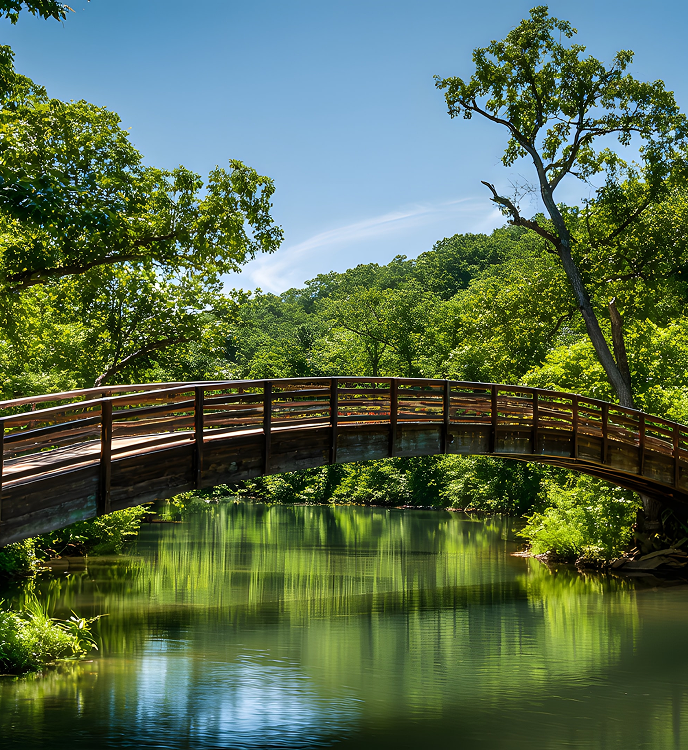
Bridges that cross openings without intermediate supports, reducing contact with waterways and sensitive wetlands. This design works well for training sites where in-water supports would restrict water flow or create maintenance issues. Clear span timber bridge construction delivers faster installation compared to multi-pier designs.

Clear span structures simplify foundation work and reduce the footprint in restricted areas. The approach works for stream crossings, drainage ways, and wetland edges where access is limited. We handle spans that meet mission requirements while staying within budget constraints.

Highlights:

  • No intermediate supports required

  • Reduced environmental permitting complexity

  • Faster construction timeline

Discuss Your Project

Trestle Bridge Construction

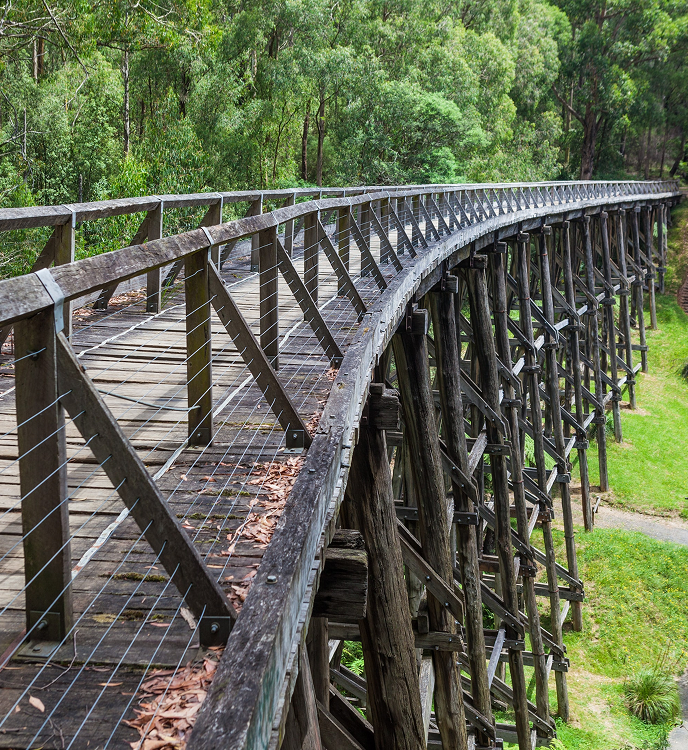
Military trestle bridges provide controlled-width vehicle crossings using pile-supported foundations. U.S. Army guidance for the 10-ton trestle bridge specifies a standard deck width of 9 feet 10 inches and a standard 15-foot span length, which suits narrow access roads and training paths. We build permanent timber trestle structures using similar geometry principles.

Trestle construction works well in soft soils where spread footings would fail. The pile-supported approach distributes loads vertically and minimizes excavation. This method fits sites with high water tables, saturated ground, or limited equipment access.

Highlights:

  • Pile-supported for soft soil conditions

  • Narrow footprint for restricted sites

  • Proven foundation method

Discuss Your Project

Bridge Repair and Refurbishment

Existing timber bridges require inspection, repair, and sometimes complete refurbishment to extend service life. We address storm damage, wood rot, hardware corrosion, and structural wear. Our bridge repair services include tear-out and replacement of piles, decking, railings, and fasteners.

Refurbishment projects begin with detailed inspection and evaluation. We provide repair recommendations and execute upgrades that bring older bridges up to current safety standards. Warranty and maintenance packages accompany completed work.

Highlights:

  • Storm damage and rot remediation

  • Load capacity upgrades available

  • Extends bridge service life decades

Discuss Your Project

What To Expect – Our Process

Step 1

Initial Consultation

You contact us to discuss your site requirements, vehicle loads, and mission constraints. We gather details about access limitations, environmental permits, and project timeline. This conversation establishes the scope and identifies potential challenges early.

Step 2

Site Inspection and Evaluation

Our team visits the site to evaluate terrain, soil conditions, hydrology, and existing infrastructure. We assess foundation options, approach road work, and staging requirements. You receive a detailed report with recommendations for bridge type, span, and construction method.

Step 3

Design and Proposal

We develop custom designs that meet your load requirements and site constraints. The proposal includes engineering details, materials specifications, construction timeline, and cost breakdown. You review the plan and make decisions without pressure.

Step 4

Construction

Our crews mobilize with company-owned equipment and begin work using methods that minimize site disturbance. We coordinate access, staging, and environmental controls. Construction proceeds efficiently with regular communication about progress and any adjustments needed.

Step 5

Final Inspection and Warranty

We complete a thorough walkthrough to confirm the bridge meets specifications and your expectations. You receive warranty documentation and a maintenance package with care instructions. Our team remains available for post-completion support and future inspections.

Common Military Timber Bridge Challenges

Challenge What It Looks Like How We Help
Remote Sites with Soft Soils Training ranges and remote installations often sit on saturated ground or fill material. Standard foundations fail or require excessive excavation that disrupts operations. We use pile-driven trestle construction that reduces excavation and keeps disturbance tight to the bridge footprint. Our drop-hammer techniques work in restricted sites where large equipment cannot operate.
Temporary Bridge Replacement Modular panel bridges like Bailey bridges serve immediate needs but lack a permanent maintenance plan. Removal logistics and component weight (upwards of 500 lbs per panel per U.S. Navy reporting) complicate replacement projects. We plan removal, staging, and installation as a single accountable scope. Our team coordinates timing with training windows and handles heavy component logistics without disrupting base operations.
Documentation Requirements Government projects require load rating language, submittal packages, safety plans, and inspection schedules that private work does not. Builders unfamiliar with these requirements cause timeline delays. We provide complete documentation including engineering calculations, material certifications, and inspection protocols. Our team plans for submittal review cycles and coordinates with base engineers early in the process.
Approach Work Neglect Strong bridge decks fail when approach roads wash out, abutments scour, or drainage concentrates water flow under supports. Buyers focus on the span and overlook critical transition work. We engineer approach transitions, drainage controls, and abutment protection as part of every project. Our designs address water flow patterns and prevent undermining over time.
Schedule Conflicts with Missions Training windows and operational schedules are fixed. When a crossing fails, detours force longer convoy routes or limit range access. Procurement teams need builders who mobilize quickly. Our company-owned equipment enables rapid response. We plan materials delivery and crew scheduling around your mission timeline. Our efficiency reduces construction windows without sacrificing quality.
Environmental Impact Uncertainty Military sites often include wetlands, protected species habitat, or water quality concerns. Construction methods that cause excessive disturbance trigger permitting delays and compliance issues. We built over 1,000 timber bridges using top-down construction and "build ten feet, then advance" methods that protect surface layers. Our environmental track record includes work for the National Park Service.

Frequently Asked Questions

Cost depends on span length, required load rating (vehicle class), foundation method, site access, and environmental controls. Pile-supported trestle construction in soft soils costs more than clear span on stable ground. We provide transparent quotes after site evaluation. Contact us for a project-specific estimate.

We bring three key advantages to military timber bridge projects:

  • Over 50 years of family bridge-building heritage with proven methods for challenging sites
  • Company-owned specialized equipment including pile-driving machinery and drop-hammers for rapid mobilization
  • Full in-house capabilities from design through maintenance with no reliance on subcontractors

Choose temporary modular (Bailey-type) when you need immediate crossing restoration or short-term access. Choose permanent timber when the site requires a long-service solution with predictable inspection cadence and refurbishment path. We help replace temporary bridges with permanent structures when the mission shifts from expedient to enduring infrastructure.

Construction time depends on span length, foundation type, access constraints, and required permits. U.S. Army technical guidance shows an 80-foot single-single Bailey bridge takes about 6.75 hours with a 43-person working party under daylight conditions. Permanent timber bridge construction takes longer but delivers decades of service. We provide realistic timelines after site evaluation.

Inspect for visible wood rot, hardware corrosion, deck deflection under load, or foundation movement. If the bridge shows multiple structural issues or fails to meet current load requirements, replacement often makes more sense than piecemeal repairs. We provide detailed inspection reports with repair-versus-replace recommendations.

Yes. We deliver warranty packages upon project completion with terms specific to your bridge design and materials. Maintenance packages include care instructions and inspection schedules. We provide ongoing maintenance programs with scheduled evaluations and minor repairs to protect your investment.

Bailey bridges are prefabricated modular panel systems designed for rapid tactical deployment. They use standardized steel components assembled on-site. Timber trestle bridges are permanent pile-supported structures custom-designed for specific sites and load requirements. Trestles use timber beams and pile foundations driven into the ground. Choose Bailey-type for temporary expedient crossings. Choose timber trestle for long-term infrastructure with minimal environmental impact.

The bullnose is the leading assembly jig that extends beyond the completed panels during launch construction. It guides the bridge as crews push it forward across the gap. The bullnose typically includes a triangular or tapered frame with rollers. It supports the unsupported span until the bridge reaches the far abutment. This component is removed after the bridge is in place.

Military timber bridge construction has deep history dating to wartime engineering. U.S. Navy Seabees built the Liberty Bridge in Vietnam, a 2,040-foot structure using 800 piles driven 40 feet into the river bottom per Naval History and Heritage Command documentation. This demonstrates timber pile-supported construction can scale to major crossings when mission requires it. Modern military timber bridges combine traditional methods with engineered designs for permanent access.

Define these elements before requesting design proposals:

  • Required vehicle class or load rating (tonnage and axle configuration)
  • Roadway width and clearance requirements
  • Foundation constraints (soil type, water table, bedrock depth)
  • Access limitations (haul routes, staging areas, equipment restrictions)
  • Environmental controls (wetland permits, turbidity limits, work windows)
  • Inspection cadence and maintenance plan
  • Removal requirements for existing structures